VIDEOVisit
VideoVisit (Videobesuch) is a video call solution specifically designed for nursing homes during the COVID-19 pandemic. It enabled nursing homes to offer video calls to residents through user-friendly software and an automated scheduling system, making it easy to connect families despite technical and regulatory barriers.
OUTCOME
Within just three months, VideoVisit became profitable and served over 300 B2B customers. It won first place in the government-backed WirVsVirus competition, which had over 28,000 participants, and the VISA Inc. business competition.
The project partnered with organizations like Caritas, Vodafone, and MediaMarktSaturn and gained significant media attention. It was featured in major German outlets, including BILD, Welt, NTV, RTL, Saarbrücker Zeitung, Deutsches Ärzteblatt, Capital, Galileo, and EPD.
#productmanagement #productdesign #branding #naming
Mentioned in





Why VideoVisit was created
Bridging the isolation Gap in nursing homes during Covid-19
During the COVID-19 pandemic, residents in German nursing homes faced severe isolation due to strict visitation bans. Many facilities lacked internet access or devices and widely used tools like Zoom or Skype were not viable due to GDPR regulations and even stricter rules for church-affiliated institutions, which manage many nursing homes in Germany.
Adding to the challenge, most elderly residents did not own electronic devices or have the skills to operate them, further limiting their ability to connect with loved ones.
To overcome these barriers, we developed VideoVisit, a solution designed to reconnect families while addressing privacy regulations, accessibility needs, and technological limitations.
How we solved the problem
Automated scheduling and Call software
VideoVisit is a video call solution tailored for nursing homes, featuring an integrated automated scheduling system. It simplifies video calls for residents, even with limited staff or devices, by minimizing caregiver involvement.
The software is fully compliant with GDPR and the stricter privacy regulations of church-affiliated institutions, ensuring data protection and security. Family members can easily schedule calls through the system, which aligns seamlessly with caregiver workflows. At the scheduled time, caregivers only need to bring the tablet to the resident—the call starts automatically at full volume and ends on its own. The streamlined user interface eliminates unnecessary options, preventing accidental interruptions and ensuring an effortless experience for residents.
Awarded by


Market validation
Understanding nursing homes in germany
The nursing home market in Germany operates as a seller’s market, where demand for care exceeds available spots. Under normal circumstances, nursing homes have little incentive to adopt new technologies to attract residents. However, the COVID-19 crisis created exceptional pressure. Public outrage over residents dying alone without the chance to connect with loved ones forced nursing homes to act.
We addressed this by providing:
- Integrated partnerships: Collaborations with major electronics retailers allowed us to offer nursing homes a ready-to-use package, including a tablet, pre-installed software, and a data plan.
- Ease of use: Automated scheduling and a hands-off interface eliminated the need for residents to operate devices, reducing the burden on caregivers.
Through these efforts, VideoVisit became a trusted tool for over 300 B2B customers, validated by the nursing home market’s rapid adoption and positive feedback.
How we solved the problem
Automated scheduling and Call software
The idea for VideoVisit was born during a hackathon, where we worked at an accelerated pace to address pressing challenges. Our initial understanding of the problem came from secondary research, stories circulating widely in the media and interviews with family members and friends, which led us to the following key pain points:
- Overwhelmed caregivers: Staff in nursing homes were too busy to manually schedule calls or supervise residents during video calls.
- Lack of technical resources: Many nursing homes lacked tablets, reliable internet connections, and residents often didn’t have the tech skills to use devices independently.
- Family disconnection: With personal visits prohibited by COVID-19 rules, landlines were often the only means of communication, leaving many families feeling helpless.
After our launch, we relied on direct user feedback, through in-app feedback tools and one-on-one interviews to iterate towards optimal product-market-fit.
Surrounding context
A product made to help during a crisis
From the start, VideoVisit was designed as a temporary solution to address a critical need during the COVID-19 pandemic. Our goal wasn’t to build a long-term business but to help families stay connected during a time of isolation.
As visitation rules returned to normal, the need for VideoVisit naturally decreased. Still, it made a meaningful impact by bringing comfort and connection to families during one of the most challenging times in recent history.
From 0 to 1
The roadmap in 2020
The competition’s tight timeline pushed us to quickly develop and test VideoVisit, achieving MVP status within a week. After gathering valuable feedback from our pilot with Caritas, we made improvements and officially launched the product three weeks later. Press coverage and key partnerships fueled rapid growth, leading to profitability within three months.

June 2020: Profitability with 300 B2B customers
For nursing homes
Easy management and seamless integration
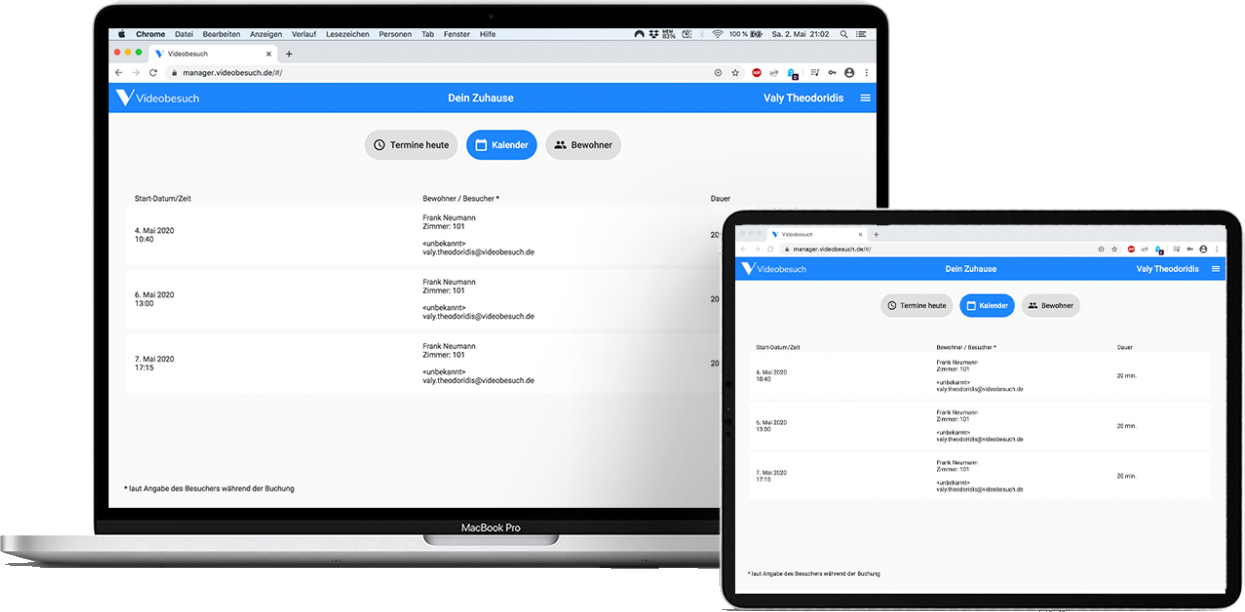
VideoVisit offers nursing homes a simple administration tool to manage resident lists, configure preferences and maintain a booking calendar. Nursing homes create an account, enter resident details and set availability for video calls.
Once registered, they share a booking link with family members, allowing them to schedule calls at their convenience. Appointments are automatically synced to the nursing home’s calendar, which can be accessed online or printed for offline use.
At the scheduled time, staff only need to have the app open on the tablet. The call automatically starts, with the volume set to maximum, and it ends once the call concludes. The minimalistic interface ensures no accidental hang-ups or changes in settings, making it easy for staff to manage. The system is fully GDPR-compliant and meets church data protection regulations, providing a secure and reliable solution.
For Families
Simple, convenient booking
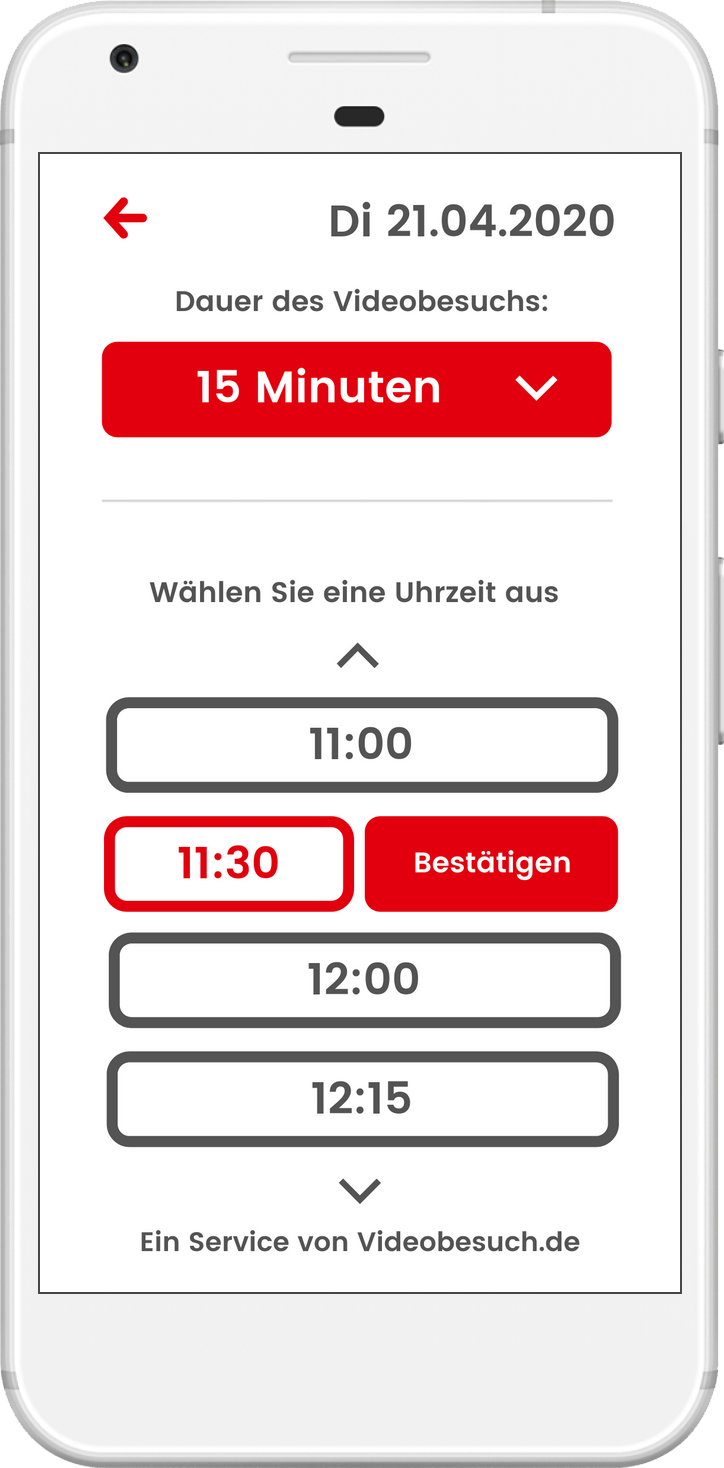
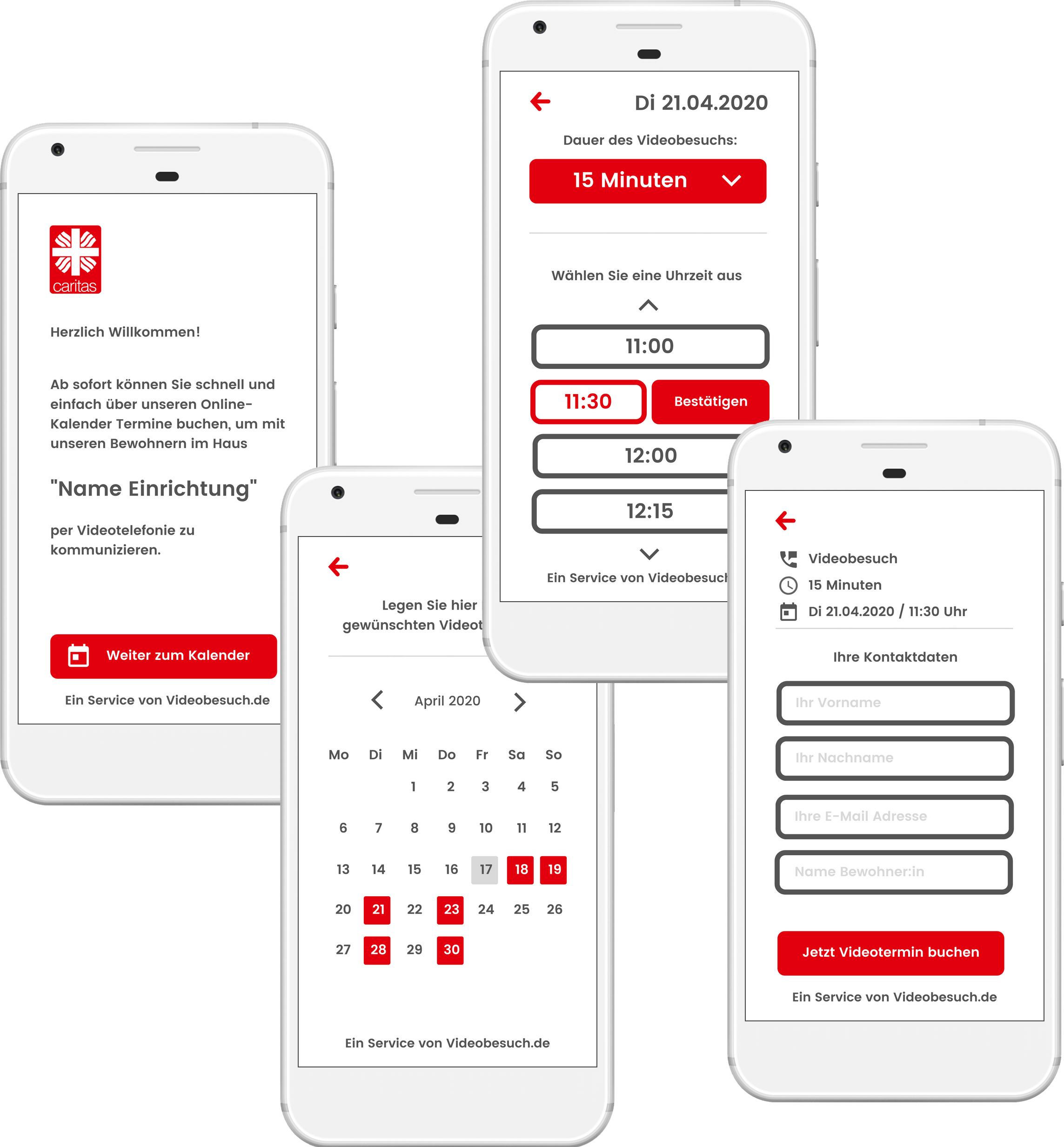
For family members, scheduling a video call is straightforward. They receive a link from the nursing home, allowing them to easily select their loved one, pick a date and time and confirm the appointment.
Once the call is booked, the family member receives a link to join at the scheduled time. The call automatically opens within the VideoVisit app on the nursing home’s tablet, requiring no additional action from the family member. This simple process ensures that families can connect with their loved ones without technical hassles, all while complying with privacy regulations.